Orbit - Canvas Designathon
Orbit - Canvas Designathon
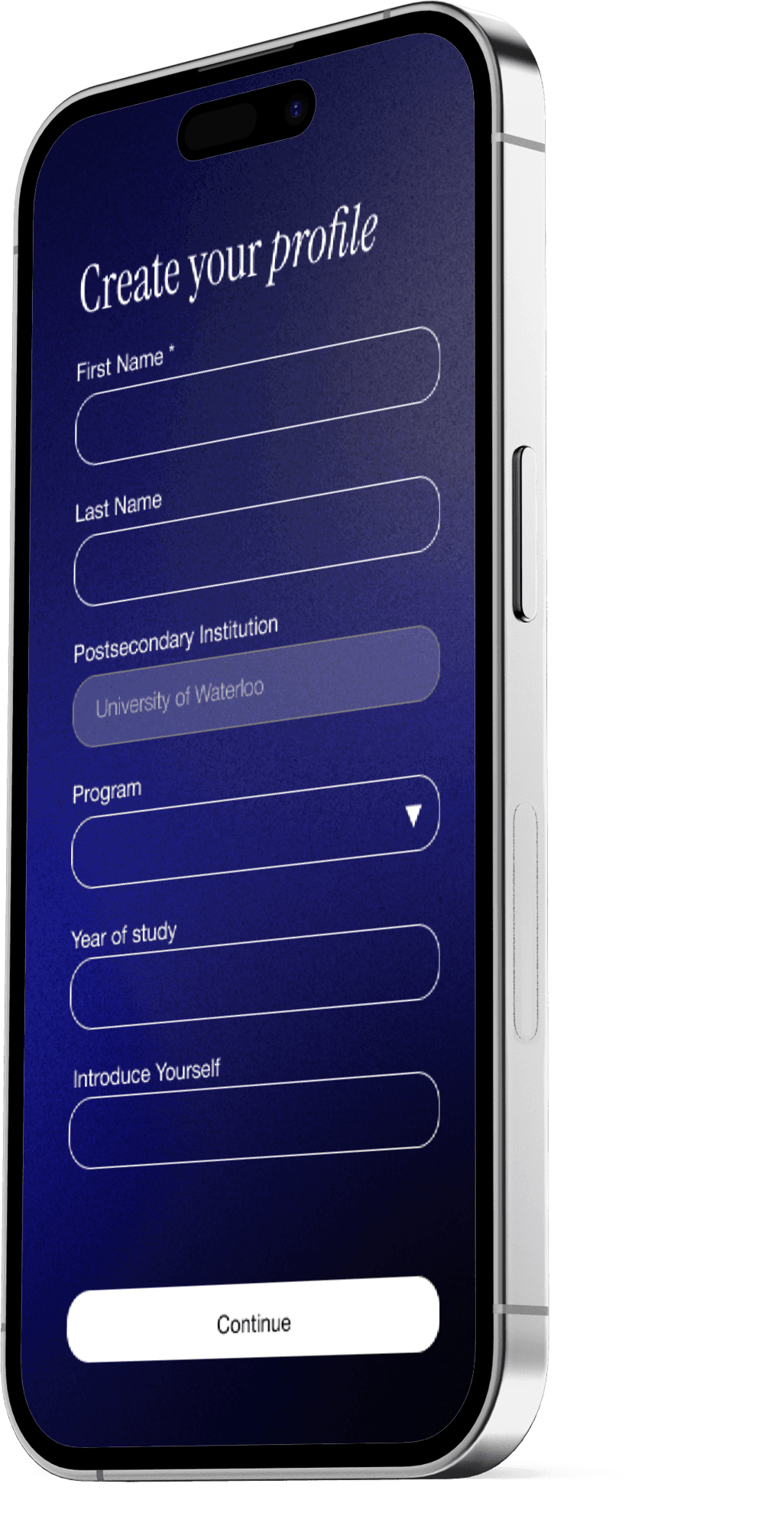
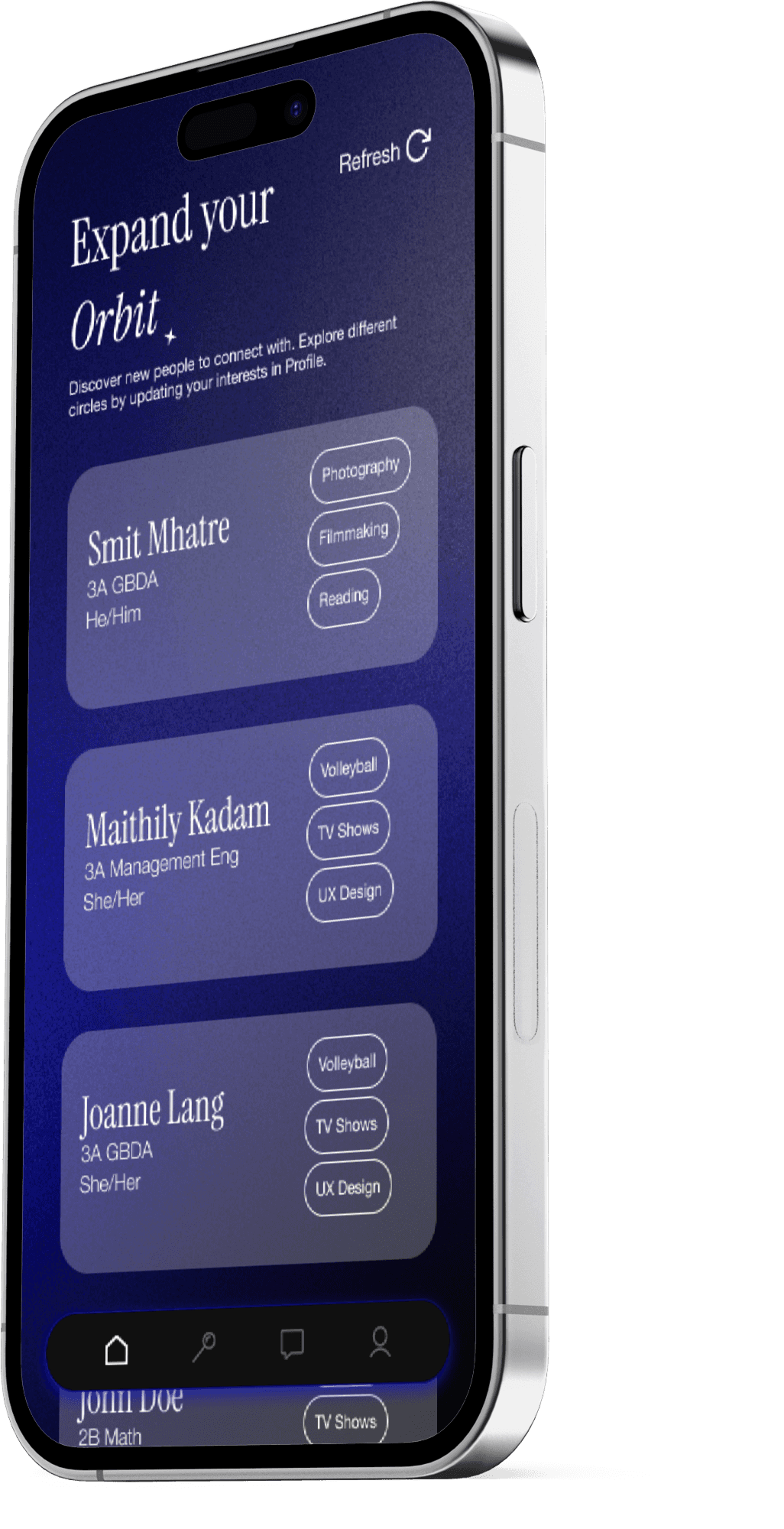
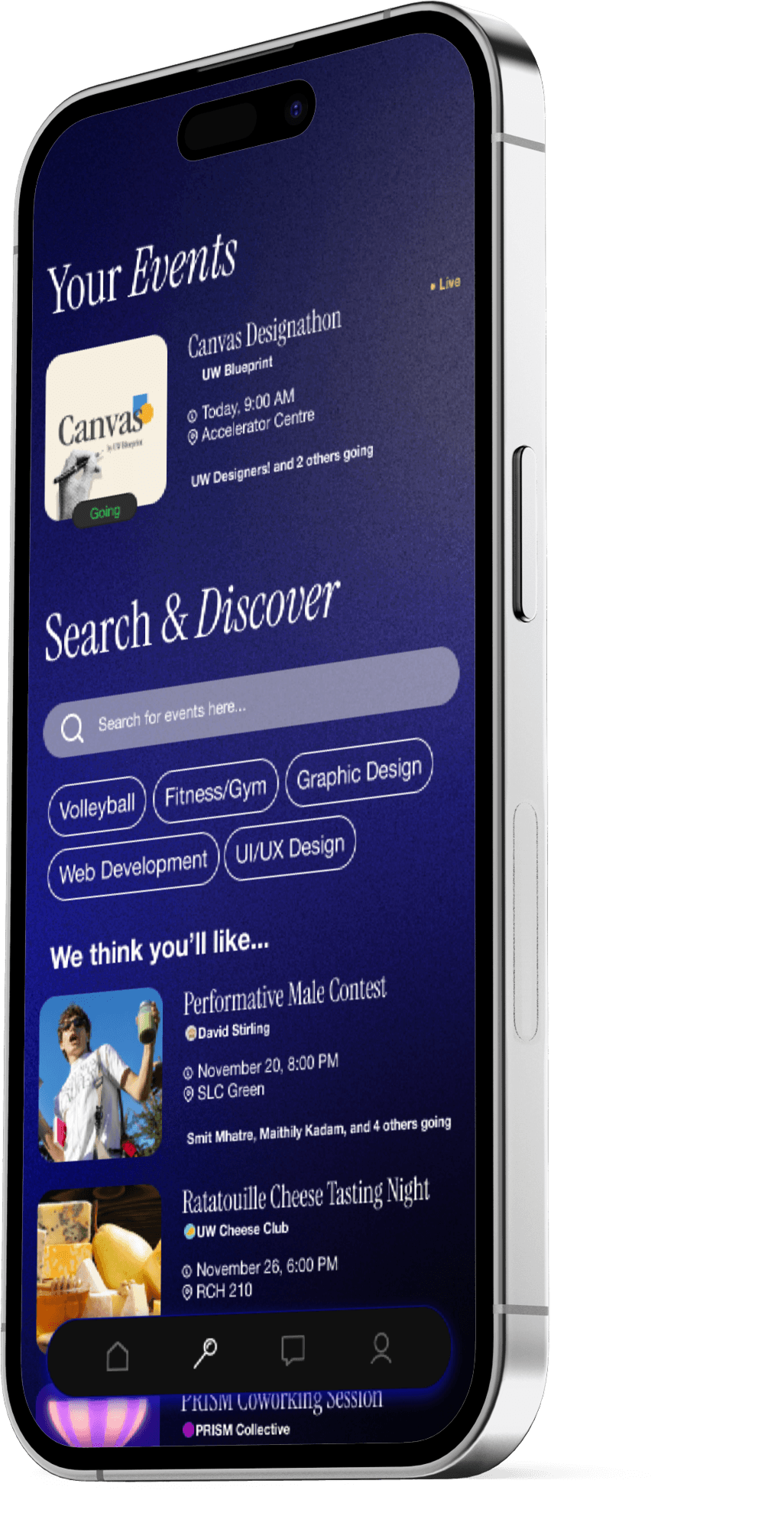
A centralized platform for students to discover events, meet peers, and build community
A centralized platform for students to discover events, meet peers, and build community
How can we bring university events, communities, and shared interests into one intuitive place for students to connect?
How can we bring university events, communities, and shared interests into one intuitive place for students to connect?
ROLE:
UX DESIGNER
ROLE:
UX DESIGNER
TIMELINE:
6 HOURS
TIMELINE:
6 HOURS
TOOLS:
FIGMA
TOOLS:
FIGMA
TEAM:
3 DESIGNERS
TEAM:
3 DESIGNERS
TL;DR
TL;DR
WHAT WAS BROKEN
WHAT WAS BROKEN
WHAT WE BUILT
WHAT WE BUILT
WHY IT MATTERED
WHY IT MATTERED
Students struggled to meet new people and discover relevant campus events, with opportunities scattered across group chats, posters, and social media.
Students struggled to meet new people and discover relevant campus events, with opportunities scattered across group chats, posters, and social media.
Orbit, a centralized platform that helps students connect with peers and discover campus events based on shared interests.
Orbit, a centralized platform that helps students connect with peers and discover campus events based on shared interests.
By lowering the friction to connect, Orbit made campus life feel more accessible, inclusive, and community-driven, especially for students who found it hard to meet people organically
By lowering the friction to connect, Orbit made campus life feel more accessible, inclusive, and community-driven, especially for students who found it hard to meet people organically
Centralized Discovery
Centralized Discovery
One place for campus events and communities
One place for campus events and communities
Meaningful Connections
Meaningful Connections
Through shared interests and mutual intent
Through shared interests and mutual intent
Lower Social Friction
Lower Social Friction
Making it easier to meet people organically
Making it easier to meet people organically
Concept shaped and validated through designathon feedback and peer critique.
Concept shaped and validated through designathon feedback and peer critique.
Understanding the Problem
Understanding the Problem
As post-secondary students, forming meaningful social connections on campus can be challenging, especially outside of existing friend groups. Opportunities to meet people and discover events are often fragmented across platforms, making it difficult for students to engage consistently or organically
As post-secondary students, forming meaningful social connections on campus can be challenging, especially outside of existing friend groups. Opportunities to meet people and discover events are often fragmented across platforms, making it difficult for students to engage consistently or organically
Core Challenges
Meeting new people often feels awkward or high-pressure
Campus events are scattered across multiple platforms
Students rely heavily on existing social circles to find opportunities
Commuter and upper-year students feel especially disconnected
Meeting new people often feels awkward or high-pressure
Campus events are scattered across multiple platforms
Students rely heavily on existing social circles to find opportunities
Commuter and upper-year students feel especially disconnected
Why Existing Solutions Fall Short
Why Existing Solutions Fall Short
Social platforms prioritize broadcasting over genuine connection
Event discovery tools lack personalization and context
Club promotion often reaches the same audiences repeatedly
Few tools support low-pressure, interest-based social entry
Core Challenges
Social platforms prioritize broadcasting over genuine connection
Event discovery tools lack personalization and context
Club promotion often reaches the same audiences repeatedly
Few tools support low-pressure, interest-based social entry
Orbit was designed during a fast-paced designathon, requiring rapid decision-making, focused scope, and lean validation.
Orbit was designed during a fast-paced designathon, requiring rapid decision-making, focused scope, and lean validation.
Limited time (hours, not weeks)
Small, cross-functional team
No formal usability testing or long research cycles
Limited time (hours, not weeks)
Small, cross-functional team
No formal usability testing or long research cycles
What This Meant For Us
What This Meant For Us
Focus on reducing social friction over adding features
Prioritize clarity and approachability in interactions
Design for interest-driven discovery rather than forced networking
Focus on reducing social friction over adding features
Prioritize clarity and approachability in interactions
Design for interest-driven discovery rather than forced networking
Constraints
Constraints
Defining the Opportunity
Defining the Opportunity
With social discovery fragmented across platforms, Orbit set out to make it easier for students to discover events and connect through shared interests in a low-pressure, inclusive way.
Opportunity Areas
Opportunity Areas
Centralize campus event and club discovery
Enable interest-based connections between students
Reduce the pressure of initiating social interactions
Support students beyond existing social circles
Centralize campus event and club discovery
Enable interest-based connections between students
Reduce the pressure of initiating social interactions
Support students beyond existing social circles
With social discovery fragmented across platforms, Orbit set out to make it easier for students to discover events and connect through shared interests in a low-pressure, inclusive way.
Design Goal
Design Goal
Encourage meaningful campus connections by making it easier and more approachable for students to discover events and meet peers through shared interests.
Encourage meaningful campus connections by making it easier and more approachable for students to discover events and meet peers through shared interests.
Structuring the Experience
Structuring the Experience
Before moving into screens, we mapped how students would move through Orbit, focusing on a simple, repeatable discovery flow rather than complex social features or overwhelming feeds.
Before moving into screens, we mapped how students would move through Orbit, focusing on a simple, repeatable discovery flow rather than complex social features or overwhelming feeds.
The experience was designed to reduce social friction by emphasizing interest-driven discovery and low-pressure engagement.
The experience was designed to reduce social friction by emphasizing interest-driven discovery and low-pressure engagement.
Core Habit Loop
Discover relevant events and communities
Explore peers with shared interests
Attend or engage in campus activities
Build connections over time
—>
—>
—>
—>
Core Habit Loop
Log a healthy meal
See immediate garden growth
Track progress over time
—>
—>
—>
—>
Compare gardens with friends
Core Areas
Core Areas
Home / Discover – personalized event and community discovery
Events – clear details, attendance context, and intent
Connections – interest-based peer discovery and engagement
Key Structural Decisions
Key Structural Decisions
Discovery-first structure
The home screen prioritizes relevant events and communities over generic feeds.
Low-friction exploration
Browsing events and people requires minimal commitment or setup.Social without pressure
Engagement is interest-driven and optional, reducing anxiety around interaction.
Discovery-first structure
The home screen prioritizes relevant events and communities over generic feeds.
Low-friction exploration
Browsing events and people requires minimal commitment or setup.Social without pressure
Engagement is interest-driven and optional, reducing anxiety around interaction.
With the experience structured around interest-driven discovery, we moved into the brainstorming phase to explore flow, hierarchy, and interaction before visual polish.
With the experience structured around interest-driven discovery, we moved into the brainstorming phase to explore flow, hierarchy, and interaction before visual polish.
Home / Discover – personalized event and community discovery
Events – clear details, attendance context, and intent
Connections – interest-based peer discovery and engagement
Designing for Connection
Low-Friction Engagement
Low-Friction Engagement
Browsing, saving, and expressing interest requires minimal commitment, reducing hesitation and drop-off.
Browsing, saving, and expressing interest requires minimal commitment, reducing hesitation and drop-off.
Interest-Driven Discovery
Interest-Driven Discovery
Events and communities are surfaced based on what students care about, making exploration feel personal and relevant.
Events and communities are surfaced based on what students care about, making exploration feel personal and relevant.
Social Context
Social Context
Seeing who else is interested provides reassurance and momentum without requiring immediate interaction.
Seeing who else is interested provides reassurance and momentum without requiring immediate interaction.
By focusing on relevance and approachability rather than social performance, Orbit reframes campus connection as something students feel comfortable returning to.
By focusing on relevance and approachability rather than social performance, Orbit reframes campus connection as something students feel comfortable returning to.
Orbit is built around a simple idea: students are more likely to engage when discovering events and meeting people feels relevant, approachable, and social.
Orbit is built around a simple idea: students are more likely to engage when discovering events and meeting people feels relevant, approachable, and social.
Using Interests as a Motivator
Using Interests as a Motivator
Shared interests act as a natural entry point for connection, helping students move from passive browsing to active participation without the pressure of forced networking.
Shared interests act as a natural entry point for connection, helping students move from passive browsing to active participation without the pressure of forced networking.
Experience Strategy
Experience Strategy
With the experience strategy defined, we moved into ideation to quickly bring the concept to life within the designathon timeframe.
With the experience strategy defined, we moved into ideation to quickly bring the concept to life within the designathon timeframe.
Designing for Connection
Rapid Ideation & Decision-Making
Rapid Ideation & Decision-Making
With limited time during the designathon, we moved quickly from problem framing to execution, prioritizing clarity, speed, and a single strong concept over broad exploration.
With limited time during the designathon, we moved quickly from problem framing to execution, prioritizing clarity, speed, and a single strong concept over broad exploration.
What Guided Our Decisions
What Guided Our Decisions
Focused on interest-driven discovery rather than multiple social flows
Prioritized reducing social friction over feature breadth
Designed for approachability and clarity before depth
Focused on interest-driven discovery rather than multiple social flows
Prioritized reducing social friction over feature breadth
Designed for approachability and clarity before depth
Key-Tradeoffs
Key-Tradeoffs
Chose concept clarity over feature completeness
Limited low-fidelity exploration in favor of faster high-fidelity iteration
Accepted imperfections to deliver a cohesive end-to-end experience
These decisions allowed us to move directly into high-fidelity design, using visuals to explore and refine the Orbit experience in real time.
These decisions allowed us to move directly into high-fidelity design, using visuals to explore and refine the Orbit experience in real time.
Chose concept clarity over feature completeness
Limited low-fidelity exploration in favor of faster high-fidelity iteration
Accepted imperfections to deliver a cohesive end-to-end experience
Design Direction
Design Direction
Approachable, Not Intimidating
Approachable, Not Intimidating
The interface avoids forced interaction or performative social elements, focusing instead on gentle prompts that make participation feel optional and comfortable.
The interface avoids forced interaction or performative social elements, focusing instead on gentle prompts that make participation feel optional and comfortable.
Playful
but Purposeful
Playful
but Purposeful
Visuals feel light and inviting while reinforcing clear actions, helping students quickly understand where to go and how to engage.
Visuals feel light and inviting while reinforcing clear actions, helping students quickly understand where to go and how to engage.
Discovery First
Discovery First
Events, interests, and people are prioritized visually, ensuring students immediately see opportunities that feel relevant to them.
Events, interests, and people are prioritized visually, ensuring students immediately see opportunities that feel relevant to them.
Design Pillars
Design Pillars
Guided by our research insights, we translated clarity, approachability, and inclusivity into a cohesive visual system that supports discovery and connection without social pressure.
Guided by our research insights, we translated clarity, approachability, and inclusivity into a cohesive visual system that supports discovery and connection without social pressure.
High-Fidelity Screens
High-Fidelity Screens
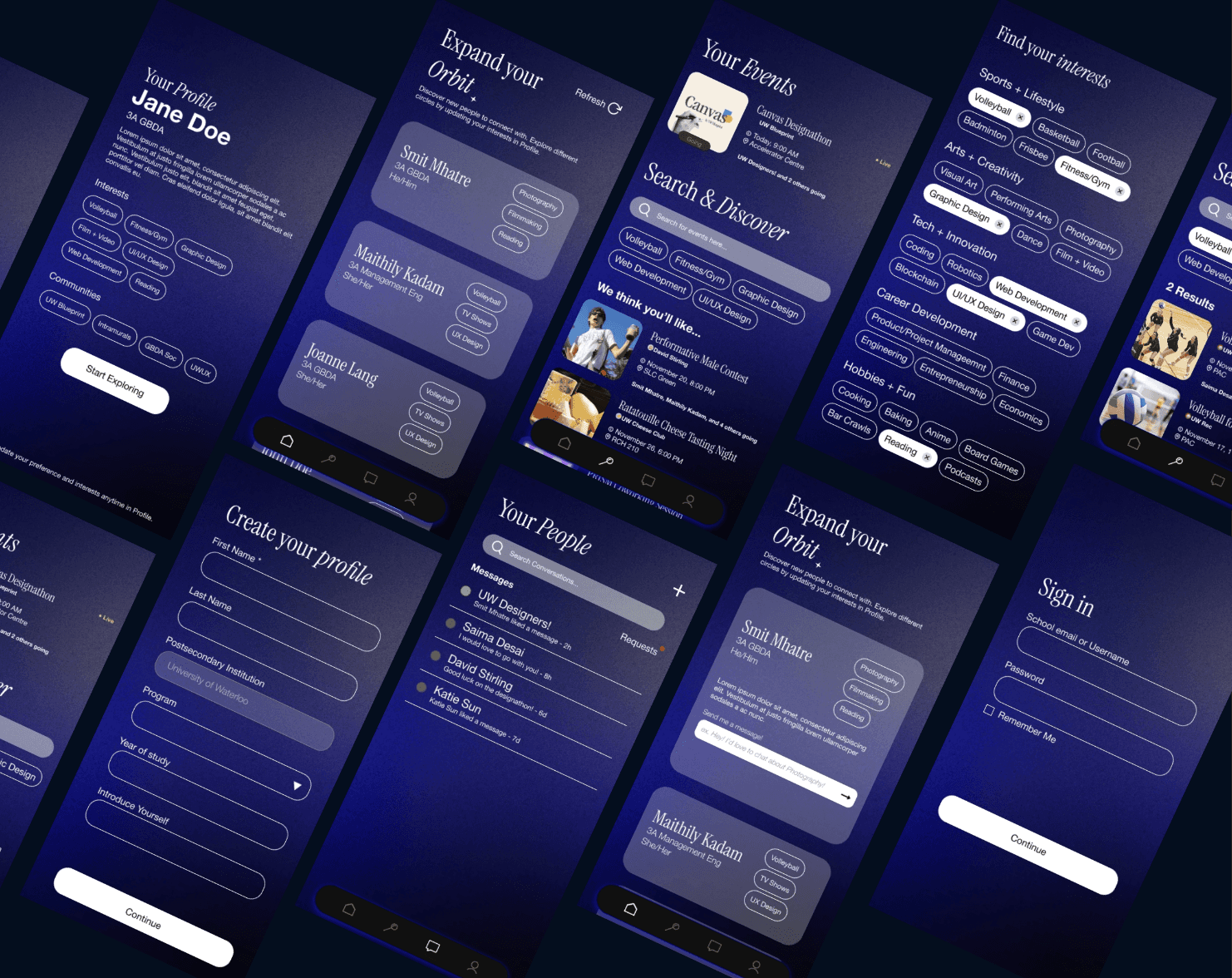
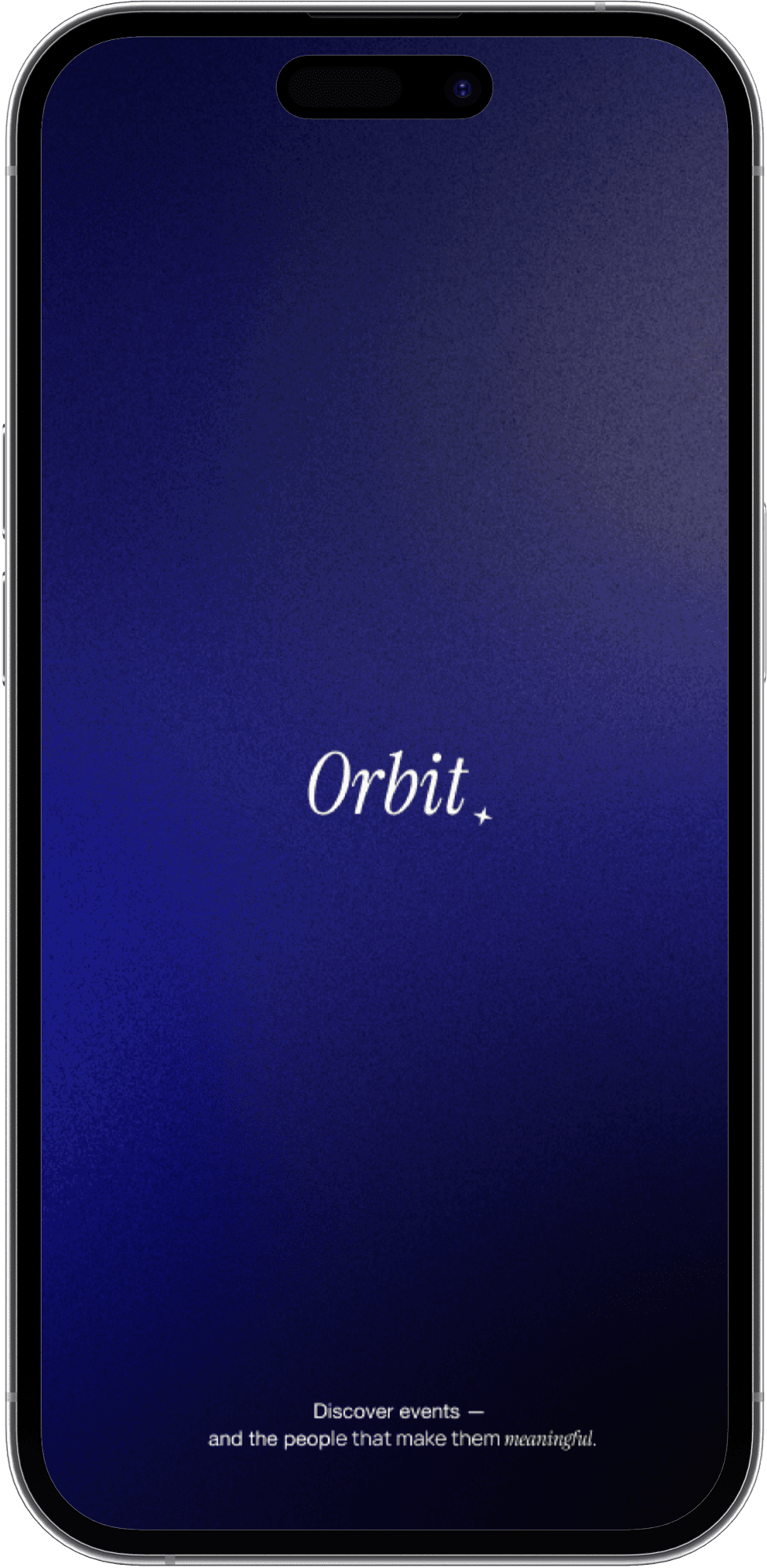
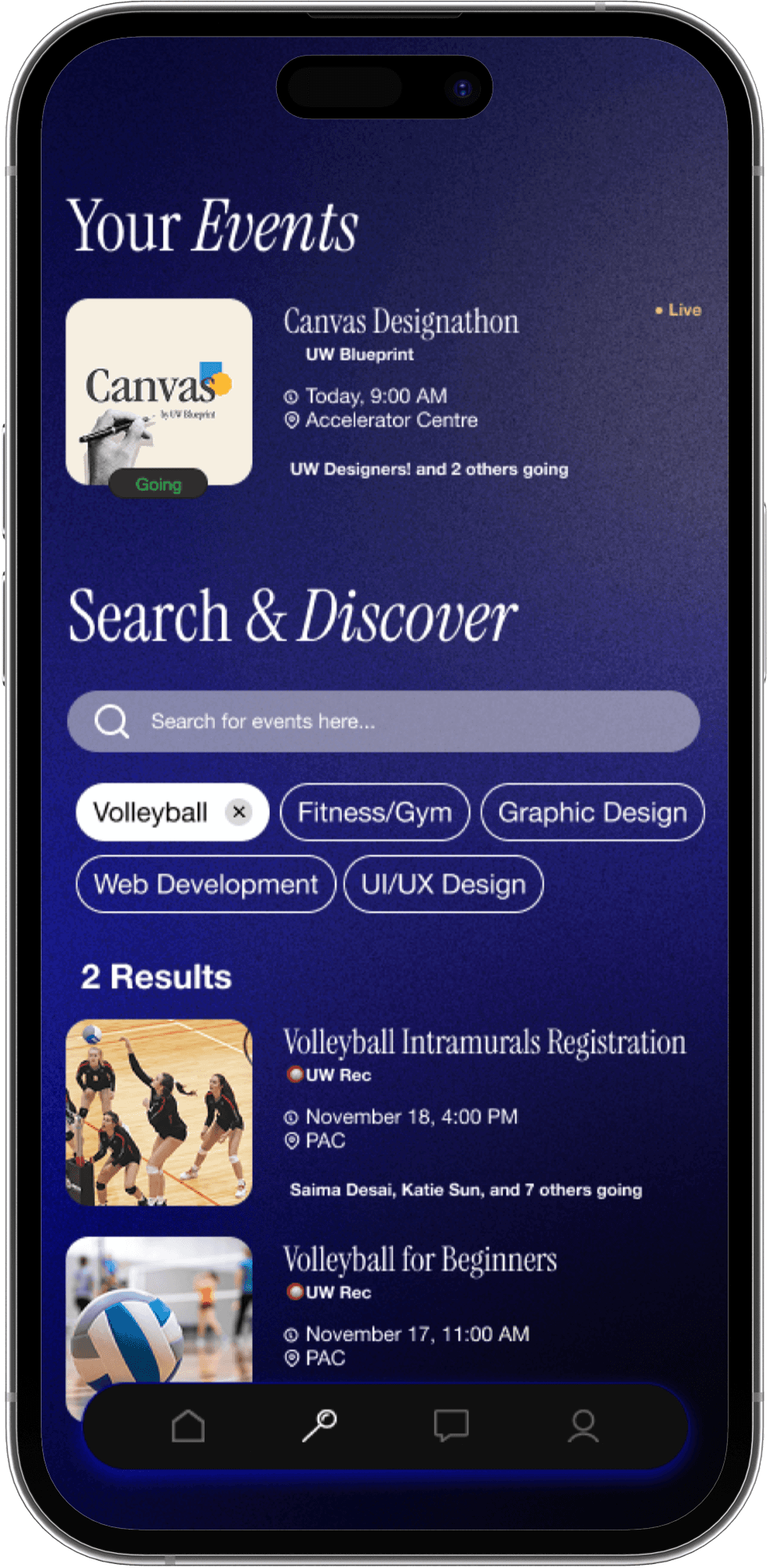
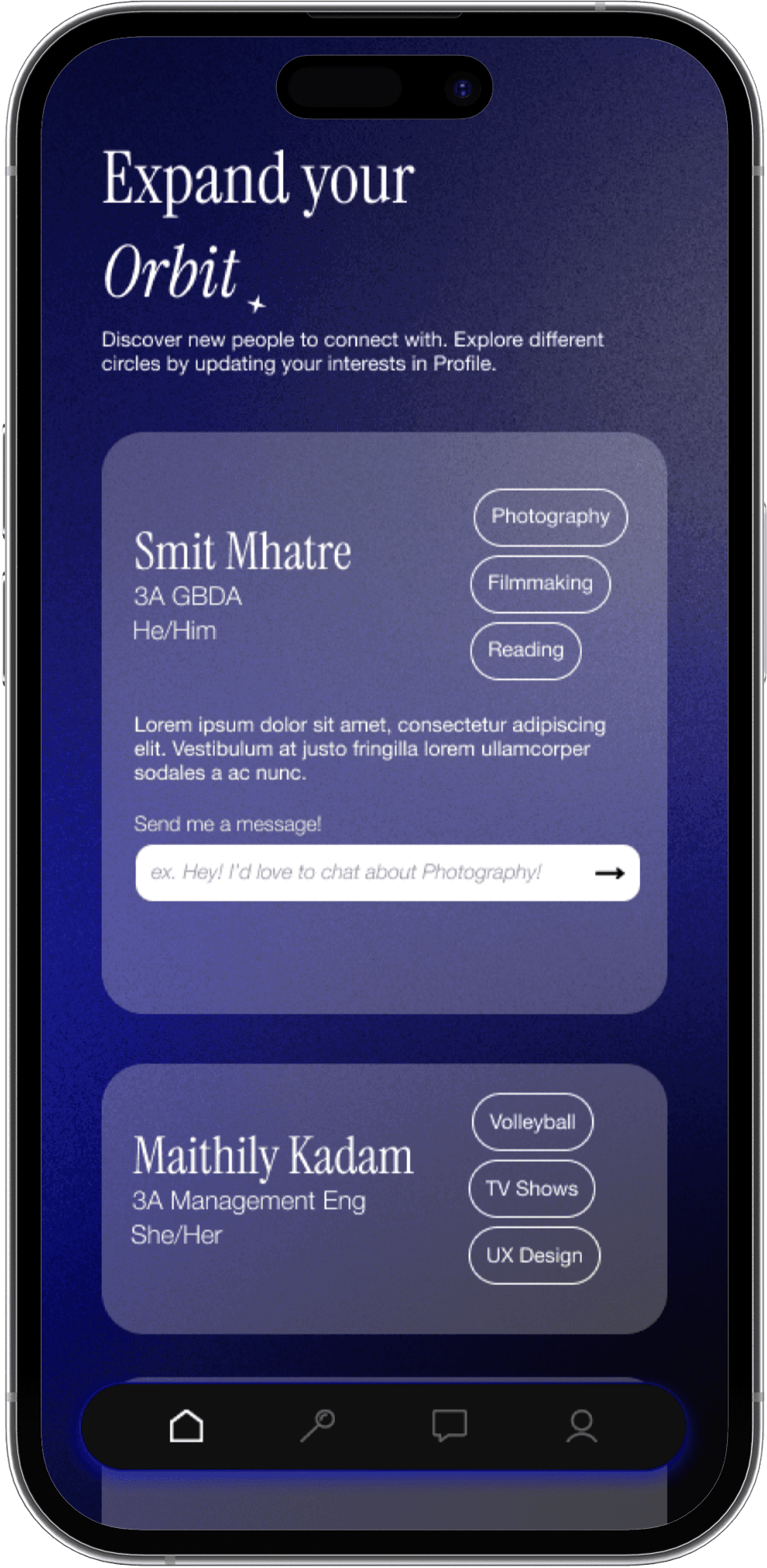
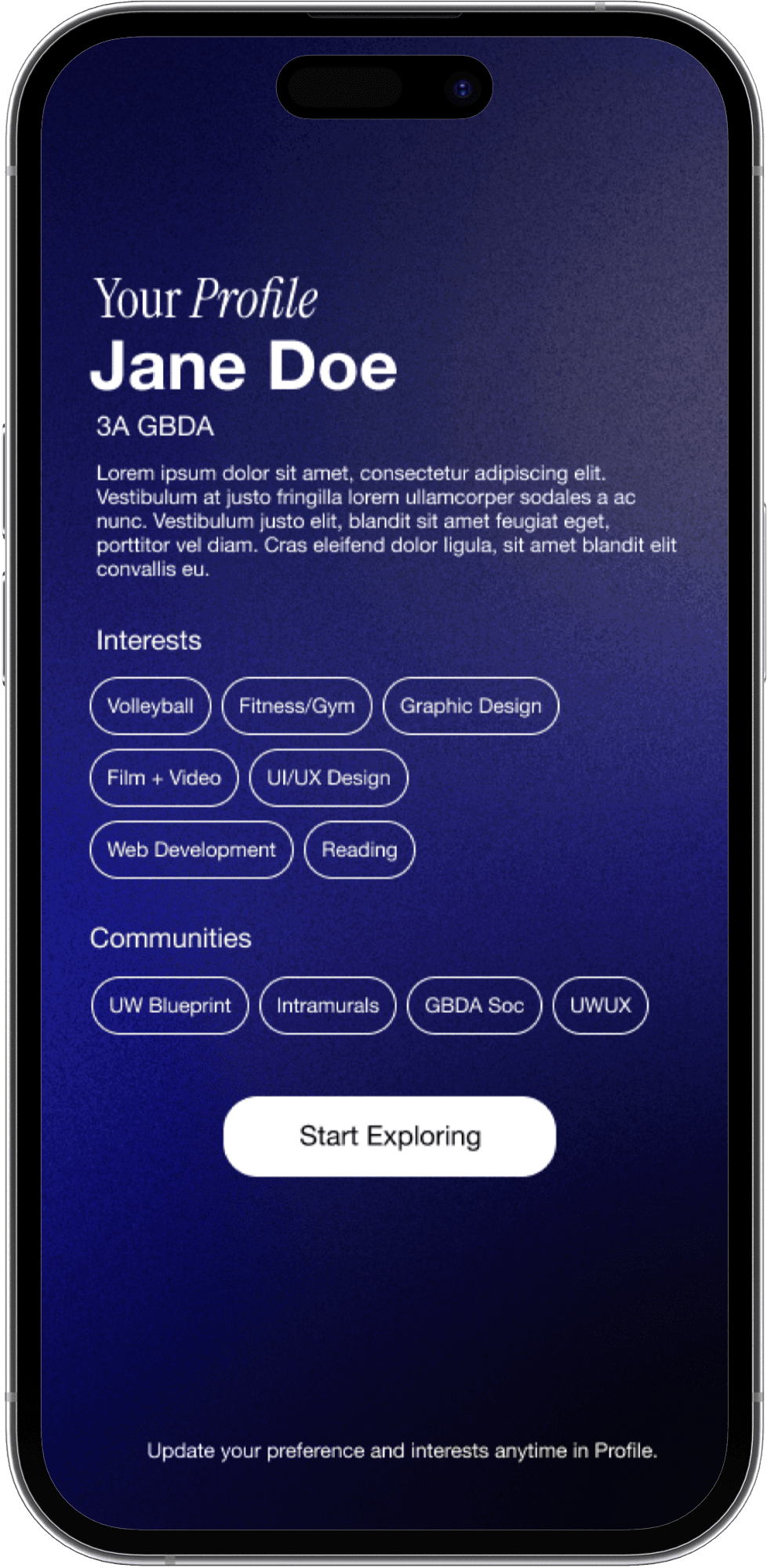
These high-fidelity screens bring Orbit’s core idea to life by emphasizing interest-driven discovery, clear navigation, and low-pressure social engagement.
These high-fidelity screens bring Orbit’s core idea to life by emphasizing interest-driven discovery, clear navigation, and low-pressure social engagement.
Together, these screens translate the concept into an experience that makes discovering campus events and connecting with peers feel approachable, relevant, and intuitive.
Together, these screens translate the concept into an experience that makes discovering campus events and connecting with peers feel approachable, relevant, and intuitive.
Within the constraints of a fast-paced designathon, Orbit demonstrated the potential for a more approachable, interest-driven way for students to discover events and form meaningful campus connections. Rather than aiming for feature completeness, the focus was on validating the core experience and direction.
Within the constraints of a fast-paced designathon, Orbit demonstrated the potential for a more approachable, interest-driven way for students to discover events and form meaningful campus connections. Rather than aiming for feature completeness, the focus was on validating the core experience and direction.
Results & Impact
Results & Impact
Students responded positively to the idea of interest-driven discovery as a lower-pressure alternative to traditional social platforms.
Students responded positively to the idea of interest-driven discovery as a lower-pressure alternative to traditional social platforms.
The concept highlighted how centralizing events and communities could help students move beyond existing social circles.
The concept highlighted how centralizing events and communities could help students move beyond existing social circles.
Orbit showed strong potential to support commuters, first-year students, and upper-years who often feel disconnected from campus life.
Orbit showed strong potential to support commuters, first-year students, and upper-years who often feel disconnected from campus life.
Results
Results
Within the limited timeframe of the designathon, Orbit successfully established:
Within the limited timeframe of the designathon, Orbit successfully established:
A clear, compelling value proposition centered on reducing social friction and making campus discovery feel accessible and relevant.
A cohesive end-to-end experience that connected interests, events, and peer discovery into a single, intuitive flow.
A strong conceptual foundation that could realistically scale into a more robust product with additional research, iteration, and development time.
A clear, compelling value proposition centered on reducing social friction and making campus discovery feel accessible and relevant.
A cohesive end-to-end experience that connected interests, events, and peer discovery into a single, intuitive flow.
A strong conceptual foundation that could realistically scale into a more robust product with additional research, iteration, and development time.
Impact
Impact
What I Learned
What I Learned
Reducing social pressure is often more impactful than adding social features.
Interest-driven discovery creates a more approachable entry point for connection.
Design Under Constraints
Design Under Constraints
Orbit represents the foundation of a larger product vision, shaped by constraint, iteration, and a deep focus on how people connect in everyday contexts.
Orbit represents the foundation of a larger product vision, shaped by constraint, iteration, and a deep focus on how people connect in everyday contexts.
PREVIOUS
PREVIOUS
Oakville and Milton Humane Society
Oakville and Milton Humane Society
NEXT
NEXT
Eco Eats - Designathon
Eco Eats - Designathon
While this project was completed within a designathon setting, Orbit is being actively revisited and expanded. With more time, the focus is on deepening user research, refining interaction patterns, and evolving the concept into a more fully realized platform.
This project represents not a finished product, but a validated starting point for a larger system designed to improve how students connect and engage on campus.
While this project was completed within a designathon setting, Orbit is being actively revisited and expanded. With more time, the focus is on deepening user research, refining interaction patterns, and evolving the concept into a more fully realized platform.
This project represents not a finished product, but a validated starting point for a larger system designed to improve how students connect and engage on campus.
What We'd Explore Next
What We'd Explore Next
Deeper user research to validate assumptions across different student groups.
Refining interaction patterns around expressing interest and attending events.
Deeper user research to validate assumptions across different student groups.
Refining interaction patterns around expressing interest and attending events.
Looking Ahead
Looking Ahead
Clear principles made it easier to make fast, confident decisions.
Focusing on one strong experience proved more effective than exploring multiple directions.
Clear principles made it easier to make fast, confident decisions.
Focusing on one strong experience proved more effective than exploring multiple directions.
Moving Forward
Moving Forward
This project shifted how I think about designing for social systems.
Orbit is being actively expanded beyond the designathon as a longer-term product concept.
This project shifted how I think about designing for social systems.
Orbit is being actively expanded beyond the designathon as a longer-term product concept.
Reducing social pressure is often more impactful than adding social features.
Interest-driven discovery creates a more approachable entry point for connection.
Let's turn ideas into impact
Come say hi! I'd love to chat :)


Let's turn ideas into impact
Come say hi! I'd love to chat :)